How to List Dual Enrollment Classes on Your Homeschool Transcript
By the time my son, Collin, was 15, his math skills were way beyond mine. Sound familiar?
Fortunately, my friend’s father was a math professor and he invited Collin to audit classes at his university. What a life-changing opportunity.
He was finally surrounded by like-minded peers, he was challenged academically, and he was able to garner some great letters of recommendation.
It happens to most of us when high school rolls around. We need to outsource some or all of our teen’s classes to meet their needs. And our own!
One of the best ways to do that? Dual Enrollment.
But here’s the thing — many homeschool parents sign up for DE classes without thinking about how to use them strategically in college admissions.
And that’s a missed opportunity.
Because Dual Enrollment isn’t just about earning college credit early.
Done right, it tells colleges a powerful story about your teen’s readiness, independence, and academic ambition.
Let’s talk about how to make that happen.

Quick Answer
✅ Yes, include Dual Enrollment on your homeschool transcript
✅ A 3–5 credit college course = 1.0 high school credit.
✅ Weight DE classes in your GPA (same as AP-level rigor).
✅ Then highlight Dual Enrollment again in your course descriptions, school profile, and counselor letter so colleges see the full story.
➡️ Want to see all of my transcript resources in one place?
Homeschool Transcript Help for College Applications
Jump To:
- What Is Dual Enrollment?
- Colleges Love Dual Enrollment Classes on Homeschool Transcripts
- How to Highlight Dual Enrollment on All 4 Documents
- 1. Transcript
- 2. Course Descriptions
- 3. School Profile
- 4. Counselor Letter
- Don’t Forget: The Community College Transcript
- What To Do Next
What Is Dual Enrollment?
Dual enrollment (DE) is when your high schooler takes a college-level course and earns:
- college credit
- AND high school credit
…at the same time.
Dual enrollment can happen at:
- your local community college
- a local university
- a local high school partnership
- online colleges across the country
Why Colleges Like Dual Enrollment on a Homeschool Transcript
Homeschoolers are uniquely positioned to do Dual Enrollment because they often have the freedom and flexibility to fit the classes in their schedule.
And colleges love to see when homeschoolers take advantage of them. Why?
It shows your teen can handle the rigor and independence.
It’s proof of college readiness.
And strong DE grades? They validate your homeschool transcript alongside grades from classes taught at home or with outside providers that admissions officers may be less familiar with.
But Keep This in Mind: When your teen enrolls in a college course, they create a college academic record.
That means:
✓ You’ll need to report that college later in applications
✓ Those grades become part of their permanent transcript history
So always know these deadlines:
- Add/Drop deadline: drop early and it may not appear at all
- Withdrawal deadline: after add/drop, you can withdraw and receive a “W” instead of a grade
If a class isn’t working out, don’t wait. Drop or withdraw early.
How to Highlight Dual Enrollment in Your Homeschool Documents
Whether your high schooler takes one DE class or a bunch of them, you have some wonderful opportunities to share their Dual Enrollment story with colleges.
Here’s where homeschoolers have a huge advantage!
Dual Enrollment can show up in:
- The Transcript
- Course Descriptions
- School Profile
- Counselor Letter
And yes, you can mention it in all four without it being repetitive.
You’re simply sharing the same story from multiple angles.
1. The Homeschool Transcript
The transcript is often the first part of your teen’s academic story that colleges see, which makes it the best place to highlight Dual Enrollment clearly.
Below are the most common questions I get from homeschool parents.
Common Dual Enrollment Transcript Questions
Should I include DE classes on my homeschool transcript?
Absolutely. When you include DE classes on your homeschool transcript, you’re sharing the full picture of rigor and progression that occured over your teen’s four years of high school.
And if your teen doesn’t apply to college? A four year high school transcript is still necessary to have.
How many high school credits is a Dual Enrollment class worth?
- 3–5 college credit class = 1.0 high school credit (even if it’s only one semester)
- 1-2 college credit class = 0.5 high school credit
What if the DE provider uses a different grading scale than my homeschool classes?
Use the grade exactly as the college gave it. Don’t convert it. If you feel like it needs explanation, mention it in the School Profile.
Should DE be weighted in my homeschool GPA?
Yes! Weight Dual Enrollment classes as you would an AP class.
I always recommend weighting your homeschooler’s GPA. If the weighted GPA contributes to admission or higher merit aid scholarships, why not take advantage of it?
I recommend giving a weighting of +1.0 for Dual Enrollment. For example, an A in a DE course would be worth 5.0 quality points instead of 4.0.
➡️ It’s automatically done for you in my Free Homeschool GPA Calculator
Wait - are you saying I should give DE classes an extra 1.0 credit to make it 2.0 credits? Nope. You don’t assign the weight in the credits - it occurs in the GPA calculation. The credit stays at 1.0; the class is given an increase in its weighting.
If you use my GPA Calculator, you don’t need to understand the details. You simply need to select “college” level when entering the course information. The calculator does it for you!
Do I need to include the college course number (ENG 101, MATH 150)?
In most cases, I do NOT include the numbers. “DE English Composition” is clearer and more readable than “ENG 101.”
Sometimes, however, when a student is applying to a state university that has a special partnership or agreement with specific community colleges, I’ll include the numbers to make it really clear that the student has fulfilled all requirements.
What about the college name - spell it out or abbreviate?
I usually abbreviate when listed by the course name and then spell out the full college name in the Notes section of the transcript - located at the bottom.
Example: BCCC for Bucks County Community College
Whatever you do, just be consistent.
What DE Classes Look Like On Your Homeschool Transcript
Here’s where parents get stuck - how do you format DE classes so admissions officers can see them at a glance? Here are a few simple options:
Option 1: Add a label next to the course name.
This is the simplest approach. Just add DE before the course title:
DE English Composition
DE College Algebra
You can also add (DE) after the course title:
Introduction to Psychology (DE)
European History (DE)
Option 2: Use an asterisk or symbol next to DE courses.
English Composition*
College Algebra*
Then include a key at the bottom:
*Dual enrollment courses completed at Bucks County Community College
Option 3: Level it up by adding the provider name next to the course name!
This is my personal favorite — and what I use with my 1:1 consulting families.
Here’s a simple example of what this looks like on a transcript:
If you’re able to cusomize your transcript template, add a “Provider” column, adding the full name of the college in the Notes section of the transcript.
| Provider | Course Name | Credit | Grade |
|---|---|---|---|
| BCCC | DE English Composition | 1.0 | A |
| BCCC | DE College Algebra | 1.0 | A- |
| BCCC | DE Biology | 1.0 | B |
In the Notes section: BCCC: Bucks County Community College
This makes it crystal clear which courses were Dual Enrollment without cluttering up the course names.
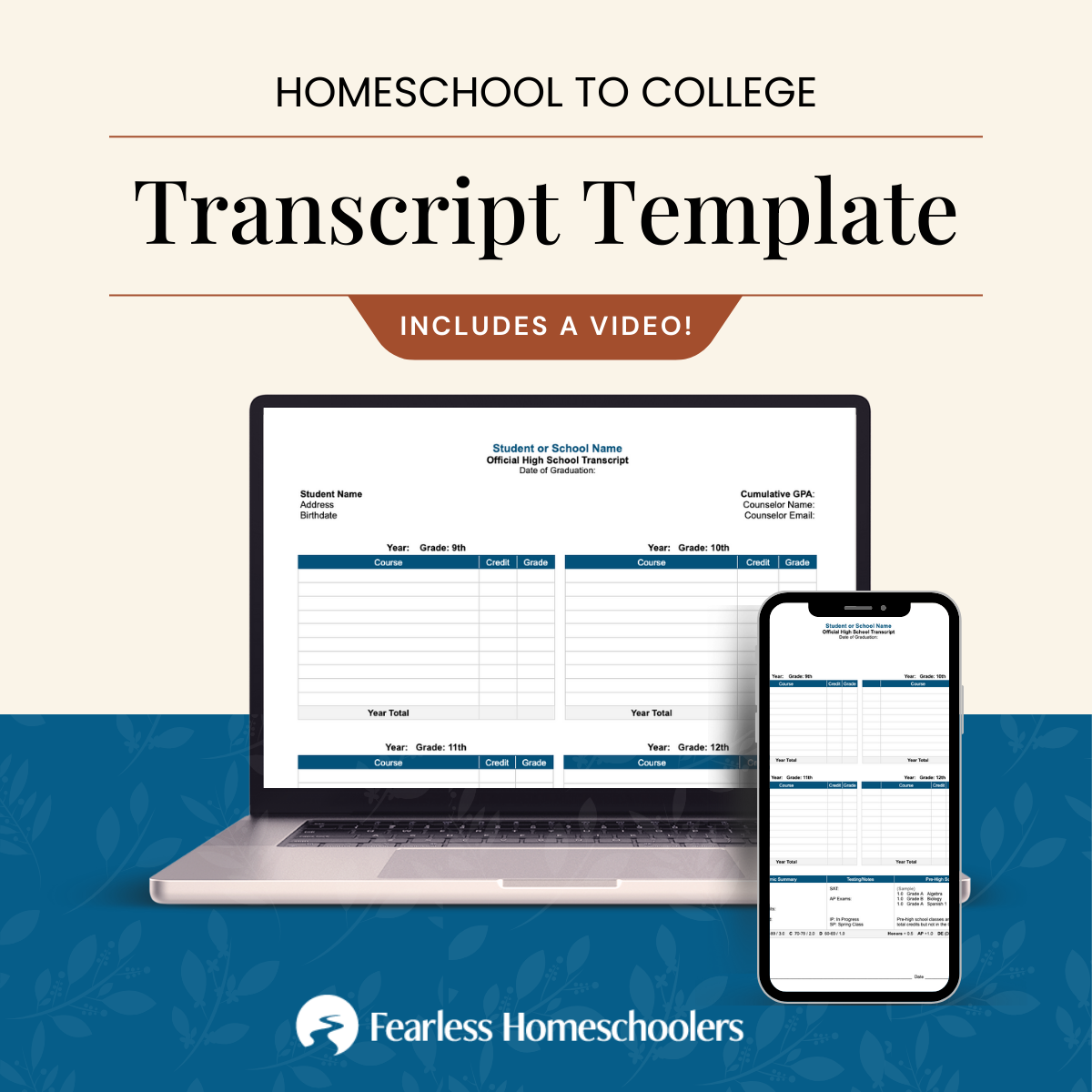
My Homeschool Transcript Template is already set up with a provider column!
Do I need have separate fall/spring semesters for DE courses?
Nope, this isn’t necessary. Your course descriptions - and the community college’s transcript - include that information.
What about summer DE classes — which year do they go under?
It doesn’t really matter, but here’s a simple rule I use:
Before August 1 → list with the previous year
August 1 or later → list with the upcoming year
Consistency matters more than perfection.
How do I list senior year DE courses that aren’t finished yet?
Include all scheduled senior year classes on your transcript when you apply in the fall — even if they haven’t started yet.
Use what’s most applicable:
IP = In Progress
SP = Spring Planned
Don’t include credits or calculate them into the GPA until the class is completed.
What about Dual Enrollment in the midyear report?
When you send the midyear report (usually late January/ early February), update your transcript with any completed fall semester DE classes. Add the final grade, include the credits, and recalculate the GPA to reflect the completed coursework.
👉 Need a refresher on credits?
Homeschool Credits for High School: The Ultimate Guide
2. Course Descriptions
Course descriptions are where you get to say:
“Here’s what this course really was.”
And yes, it matters to colleges.
Common questions about DE in course descriptions
Should Dual Enrollment classes go in course descriptions?
Yes - I recommend it. That way, your course description document gives colleges a thorough overview of your teen’s entire homeschool journey, not just the classes taught at home.
How do I write the DE course description?
This one’s easy. Copy and paste the relevant bits from the college’s course catalog or the teacher’s syllabus. The college already did the heavy lifting for you.
What if we don’t remember books/materials/evaluation details?
No problem. Leave off those sections if you need to. The fact that it’s a college-level course already speaks for itself.
➡️ Want help writing strong descriptions fast?
How to Create Course Descriptions as a Homeschooler
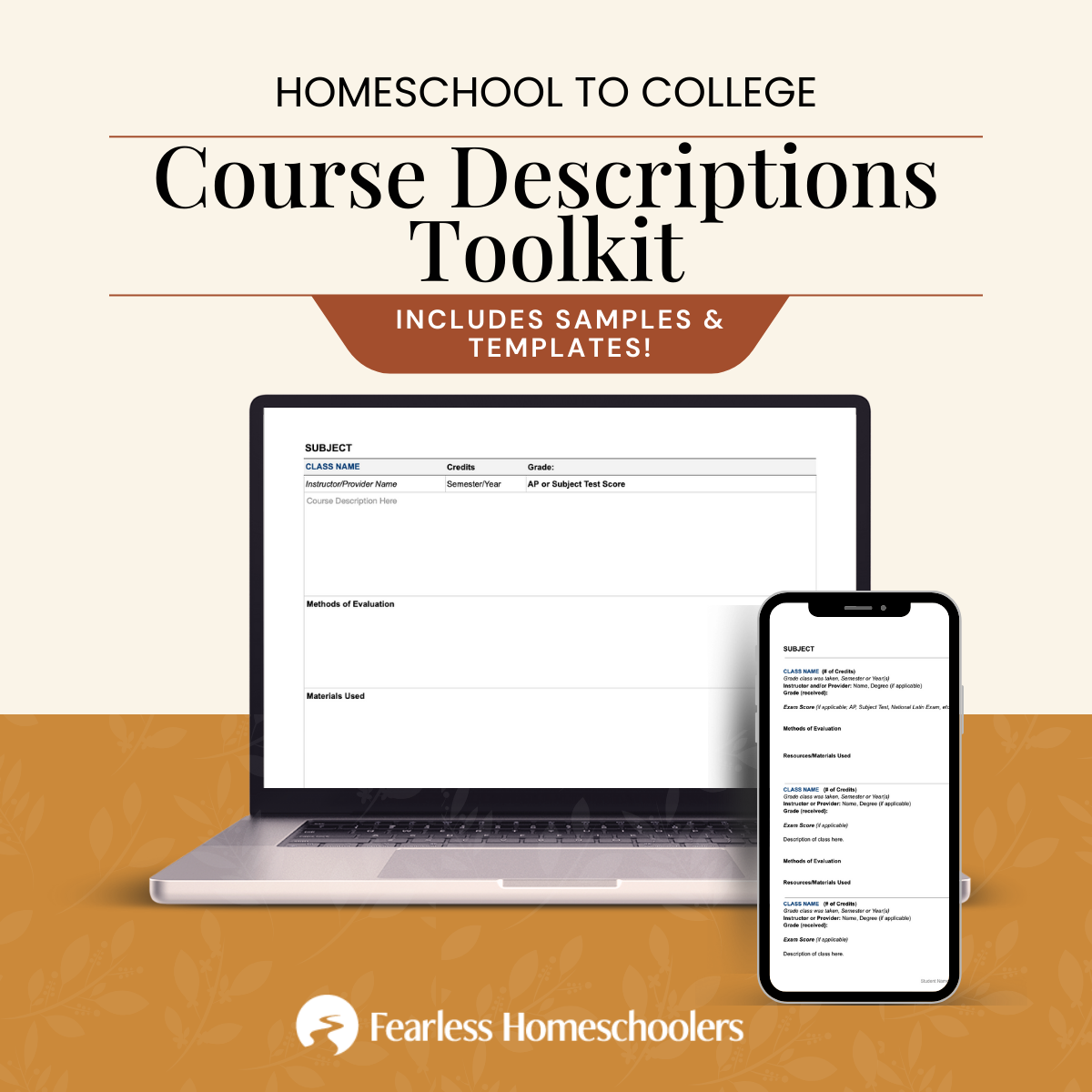
👉 Want the template + samples?
Course Description Toolkit
3. The School Profile
Your school profile is where you explain the why behind your choices.
Dual enrollment fits beautifully here — because it proves intentional planning.
Common questions about DE in the Homeschool School Profile
Where do I mention DE in the school profile?
Two places:
1. Curriculum section
Explain why your teen included DE classes in their high school years - and how they thrived. This is your chance to show colleges that you made an intentional, strategic choice - not just a convenient one.
2. Educational Partners section
Include the name and a brief bio of the college where your teen took DE classes.
Do I need to list every professor?
No. Only list someone if it adds meaningful credibility or context.
➡️ Learn more here:
How to Create a School Profile for Homeschool College Applications
👉 Want templates + examples?
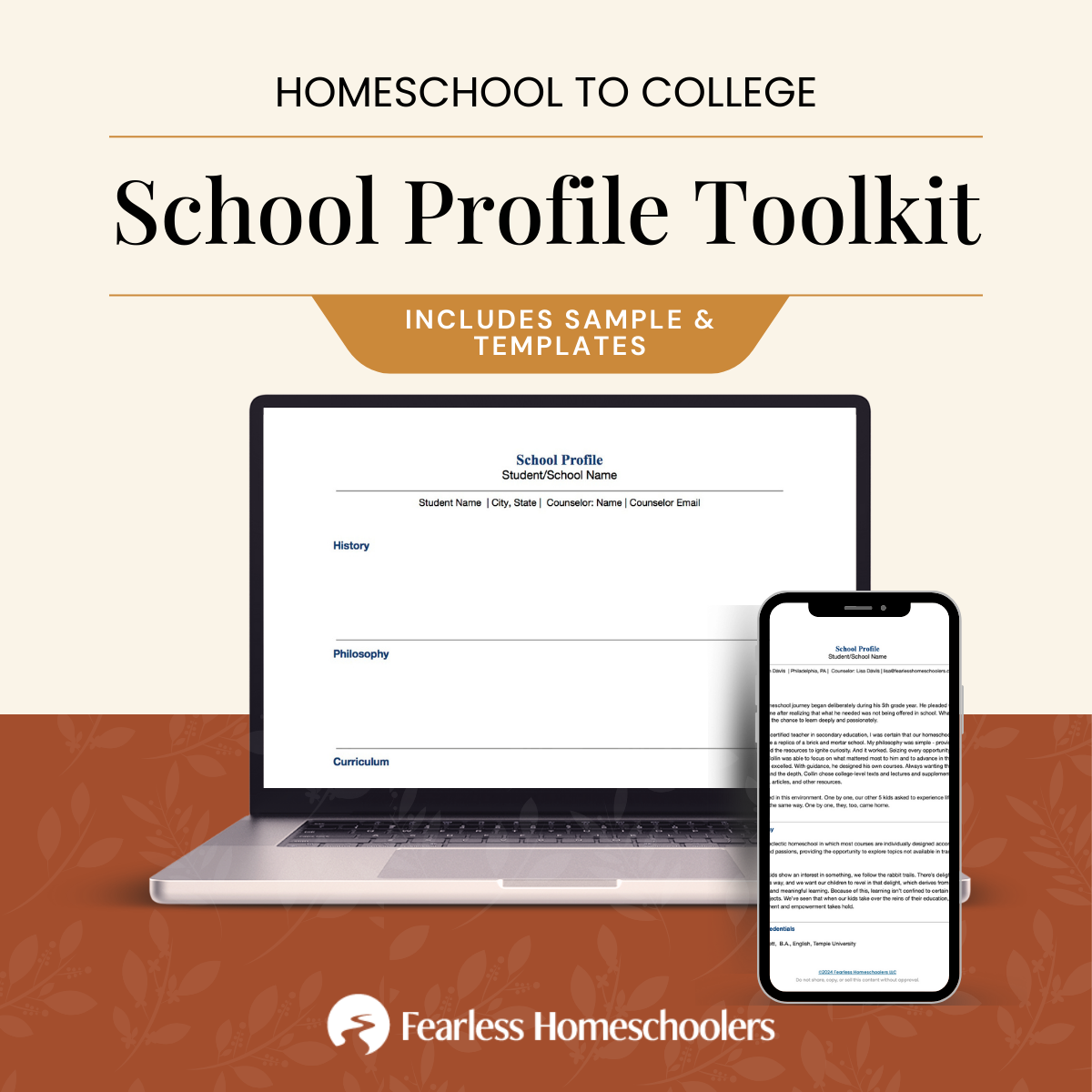
School Profile Toolkit
4. The Counselor Letter
This is where you get to highlight what Dual Enrollment reveals about your teen.
Common Questions About Dual Enrollment in the Counselor Letter
How can I mention DE in my counselor recommendation?
When describing your teen as a student: Highlight their growth, adaptability, independence, and the confidence it took to step into a college classroom alongside peers who are older and more experienced. But don’t just tell them, show them. With stories, anecdotes.
Should I include professor feedback?
Yes. If you have some. If a professor has emailed you or your teen with encouraging feedback on an assignment, quote it. Even a line or two shows colleges that your teen made an impression beyond just a grade on a report card.
Even one short line in the counselor letter can be powerful:
“Her professor noted she was one of the most engaged students in the class.”
➡️ Want quick help with your letter? :
How to Write a Homeschool Counselor Letter of Recommendation
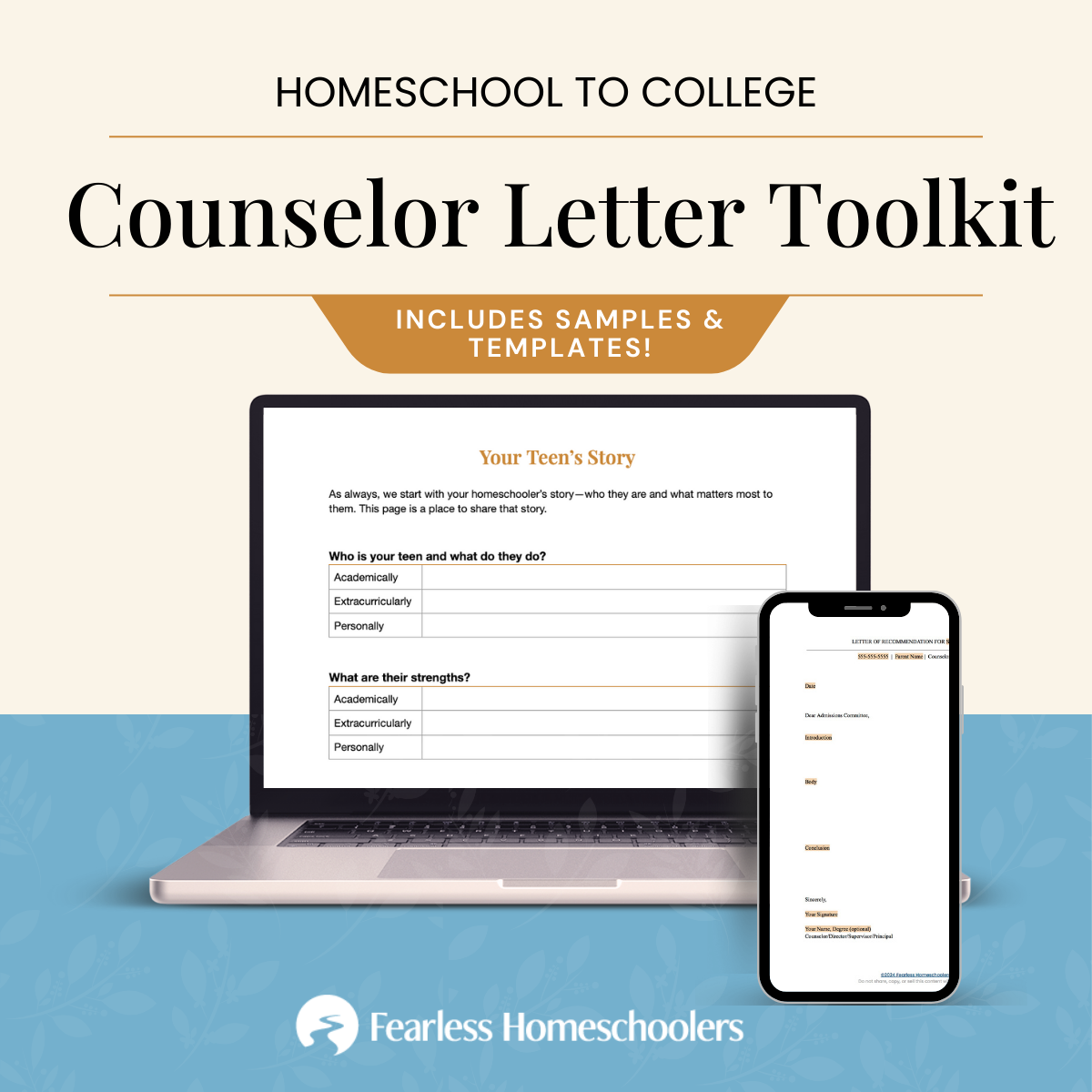
👉 Want the step-by-step template?
Counselor Letter Toolkit
One More Thing: The Dual Enrollment Transcript
Colleges will want a copy of the college transcript in addition to your homeschool transcript.
- Some want it…at application time.
- Others…after enrollment.
- Some allow unofficial uploads.
- Others require the official transcript to be sent directly from the college.
How to Submit Dual Enrollment Transcripts to Colleges on Your List
Should I request that the official DE transcript be submitted directly to every college on my homeschooler’s list?
It depends. Some colleges want it at application time. Some only need it after your teen enrolls. You can do two things:
- Check with each college’s regarding their requirements, or…
- If you have the time and financial resources, simply submit to each college. This may be the costly option, but it saves you the legwork of reaching out to each school.
Can I just upload it to the Common Application with my own transcript?
In many cases, this might be just fine. But, again, check with each college. Some may want the official transcript.
👉 The only way a community college transcript is official is when it’s sent directly from them to the colleges on your list.
How do I know if a college requires the official DE transcript?
Check the admissions requirements page on each college’s website, or call the admissions office directly. Don’t assume - requirements vary widely from school to school.
➡️ Check each college’s requirements early so you’re not scrambling at deadline time.
➡️ Need the Common App upload walkthrough?
How to Navigate the Common App as a Homeschool Parent
What To Do Next
If your teen is taking DE classes right now:
- Add DE clearly to the transcript this week.
- Grab the syllabus/course catalog text for course descriptions.
- Keep strong records (class name, provider, professor name, notes).
- Save any professor feedback emails (gold!).
- Thank yourself later. ;)
➡️ Want all transcript resources in one place?
Homeschool Transcript Help for College Applications
Welcome!

I'm Lisa Davis, Founder of Fearless Homeschoolers and proud member of IECA. As a college admissions consultant who's worked with hundreds of homeschool families, I believe you should know exactly how to go through the homeschool to college journey without second guessing yourself. Join me and I'll show you the way...
Shop for Transcript Templates & More!